This holiday I've spent clearing out my parents' old house. Part of this process has involved me appraising my old books (of which there are hundreds and hundreds) and trying to decide which can be thrown out and which can go to the local library or charity shop or whatever. I came across Leiber's Ill Met at Lankhmar, a collection from the early 2000s which brings together, I think, "Swords and Deviltry" and "Swords Against Death".
Re-reading these old stories, it occurs to me that you may as well not read any high fantasy series published in the last 30 years or so if you've read Leiber. I use the words "high fantasy" advisedly, because although the Fafhrd and Grey Mouser stories are more sword & sorcery than high fantasy, almost all high fantasy stuff that was published in the 80s, 90s and 00s was a footnote on what Leiber was writing in the 70s - from the back-story to both men (every main character in every epic fantasy series has a tragic origin story like Grey Mouser) to the sassy, just-as-good-as-you female leads who are just dim reflections of Vlana, to the innocent-girl-turned-unlikely-heroine female leads who are just dim reflections of Ivrian, to the strong themes of revenge, to the very un-Tolkienesque prevalence of magic (divided, as so often the case, into 'good magic' and 'bad magic')... It makes the Fafhrd and Grey Mouser stories seem like old hat, until you remember that no, it's just that most modern fantasy series were old hat before they were even conceived.
A while ago, because I felt like being controversial, I made the statement on some forum or other that I though that the Dragonlance books are probably just as good as most of the things in Appendix N. Although I said that with mischievous intentions, I also think it's true. The Dragonlance books are not great, but for a 13 year old boy they are good entertainment, and that is really the most you can say for most of the Michael Moorcock books, most of Lovecraft's fiction, Edgar Rice Burroughs, Phillip Jose Farmer, etc. People in the D&D blogosphere might not like to admit it, but the best you can say about a lot of the writings of a lot of those writers is that they pass the time and have some interesting ideas in. Admittedly there are a number books/authors on Appendix N that I've never read, but even if those works were all hidden masterpieces it would still place Weis & Hickman somewhere in the middle-to-lower rung. In a weird sort of a way, they probably deserve more credit; I know this doesn't apply universally, but I generally think of great books as being those which have moved me emotionally - and I have to confess that I was very moved emotionally as an adolescent reading about the death of Sturm or Caramon's efforts to stop his mad brother destroying the universe. Much more so, indeed, than I ever was reading about Elric's exploits, fun though they are.
Which fantasy books are really worth reading? Given that you have a finite amount of time in your life and there are so many other books out there? There's a novel by Jonathan Franzen called Strong Motion, which like all of Franzen's books is beautifully and sensitively written, if somewhat appalling at the same time; in it there is fairly extended section which describes the evolution of the music collection of one of the characters, Dr. Reneé Seitchek. She starts off with a large collection of punk music on old cassettes, but as time goes by and she gets older and older and more jaded her collection starts to dwindle and she starts just compiling mix tapes with some of her favourite tracks on...but as time goes by and she gets older still she starts to grow tired even of them, and she ends up just taking segments of single tracks that she likes and running them together, so that she finishes off compressing all of the music in the world that she likes into a single cassette or two. I sometimes feel like that about fantasy fiction. Give me a single 1000 page volume containing the distilled essence of Vance, Wolfe, and Tolkien and that may very well do me for the rest of my days.
Tuesday, 31 December 2013


Monday, 23 December 2013
What the Lazy Bastard Has Been Working On; Or, Yoon-Suin is On the Road to Completion, Honest
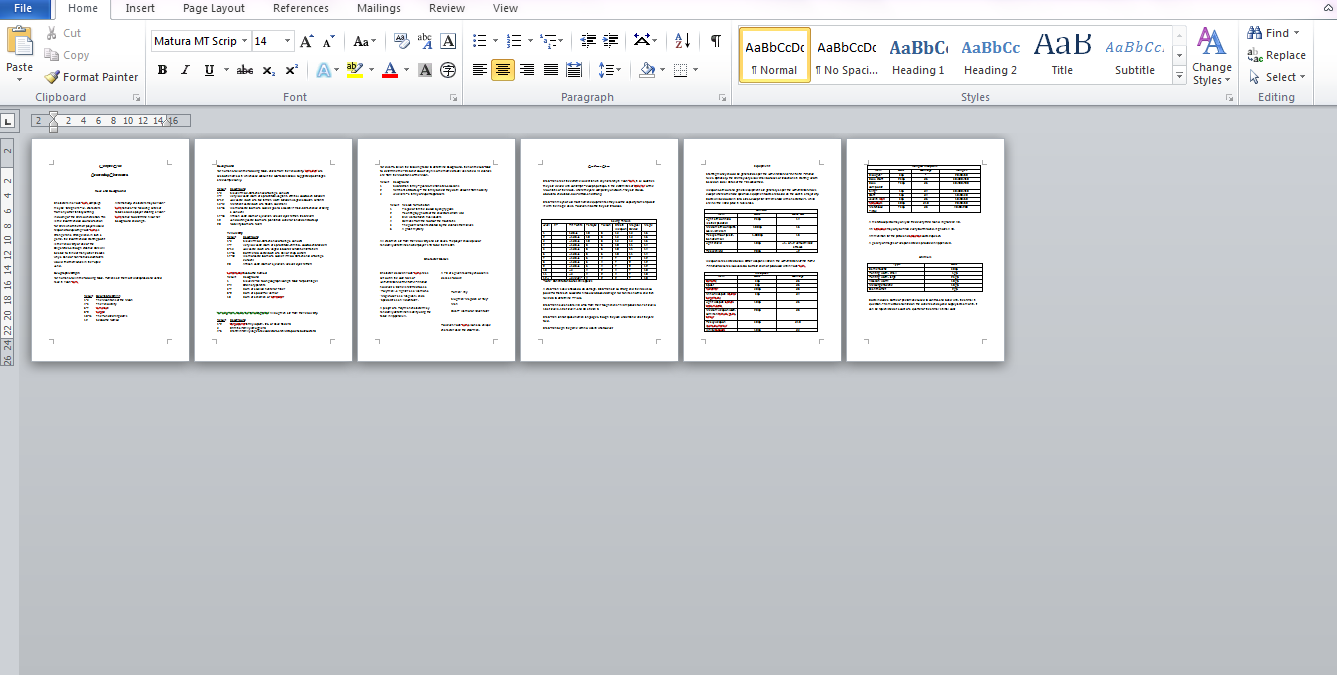
It's been a ridiculous November and December but I have managed to work a little bit on Yoon-Suin here and there. The content is entirely complete and I'm currently undergoing the laborious process of transferring everything from OneNote to Word (having given up on fancy schmancy layout programs after what seemed like aeons of aimless fiddling). This is about 5-10% finished.
Here are some mysterious screen grabs. No art as yet. That's the final hurdle.


Here are some mysterious screen grabs. No art as yet. That's the final hurdle.



Sunday, 22 December 2013
Creative Constraint and Beekeeping
An intermittent theme on my blog down the years (see e.g. here) has been creative constraint: how providing strict boundaries in terms of what the DM and players can create (particularly during the setting up of a new campaign) can actually allow imaginations and inspiration to flourish.
Take beekeeping. The latest Econtalk podcast is all about the economics of beekeeping. While it is wide-ranging and covers everything from how to transport bees to CCD (which means Colony Collapse Disorder - don't you know anything?) to externalities to the almond-growing industry of California, the most interesting section by far in my mind is where the conversation moves onto the idea of migratory beekeepers. This may not be the case in other countries, but apparently in the US many beekeepers spend their working lives travelling around: based in the South, say, and moving to California for the early almond pollination season, then travelling up the West coast through Oregon and Washington for apples, berries, cherries and so on, and then pitching up in the Dakotas to allow the bees to spend summer gorging on sunflowers. Then it's back down South for winter. Similar migratory patterns go up and down the East coast from Florida to Maine and so on.
Saying that you are going to run a beekeeping campaign and you would be characterised as some sort of dangerous eccentric in most RPG circles; not because of the subject matter but because it seems so very limiting. The PCs really have to start off as beekeepers and nothing else? And all they're going to do is travel round with, and manage, bees?
But once the limits are set, the mind starts to whir with possibilities. How about, rather than just having honey bees, the world is full of many different kinds of bee, all with different characteristics, tastes, and vulnerabilities? And how about a d100 table of random bee pests and diseases that might strike at a given moment? What about all the possibilities for hexcrawling: where do you stop for the night with your hives? Where do you migrate to - do you follow the spring as it heads Northwards, or strike off on a different, less travelled path where there are fewer competitors? What kind of monsters and bandits lie in ambush on the well-journeyed routes? What kind of monsters does honey attract in general? There would need to be a set of tables for generating competitor beekeepers, their hives, and helpers, of course. Each would have their own agenda, their own rivalries and alliances, their hidden ancestral knowledge. The same goes for the farmers. There would need to be a system for determining costs based on the presence of competition, weather, crop type...and rudimentary rules for trade in general.
And of course, there would need to be complicated procedures for what happens when bees make honey from the nectar of poisonous plants, or whatever kind of weird fantasy flora you happen to come up with.
I'm not suggesting that the beekeeping campaign is the one we should all be running, you understand. The point is simply this: once constraints are set in place, creativity starts to flourish. Envisage human creativity like water: without barriers it floods endlessly in a very thin and ever-spreading sheen. With constraint it bursts upwards like a fountain. And I give you metaphors like that free of charge.
Take beekeeping. The latest Econtalk podcast is all about the economics of beekeeping. While it is wide-ranging and covers everything from how to transport bees to CCD (which means Colony Collapse Disorder - don't you know anything?) to externalities to the almond-growing industry of California, the most interesting section by far in my mind is where the conversation moves onto the idea of migratory beekeepers. This may not be the case in other countries, but apparently in the US many beekeepers spend their working lives travelling around: based in the South, say, and moving to California for the early almond pollination season, then travelling up the West coast through Oregon and Washington for apples, berries, cherries and so on, and then pitching up in the Dakotas to allow the bees to spend summer gorging on sunflowers. Then it's back down South for winter. Similar migratory patterns go up and down the East coast from Florida to Maine and so on.
Saying that you are going to run a beekeeping campaign and you would be characterised as some sort of dangerous eccentric in most RPG circles; not because of the subject matter but because it seems so very limiting. The PCs really have to start off as beekeepers and nothing else? And all they're going to do is travel round with, and manage, bees?
But once the limits are set, the mind starts to whir with possibilities. How about, rather than just having honey bees, the world is full of many different kinds of bee, all with different characteristics, tastes, and vulnerabilities? And how about a d100 table of random bee pests and diseases that might strike at a given moment? What about all the possibilities for hexcrawling: where do you stop for the night with your hives? Where do you migrate to - do you follow the spring as it heads Northwards, or strike off on a different, less travelled path where there are fewer competitors? What kind of monsters and bandits lie in ambush on the well-journeyed routes? What kind of monsters does honey attract in general? There would need to be a set of tables for generating competitor beekeepers, their hives, and helpers, of course. Each would have their own agenda, their own rivalries and alliances, their hidden ancestral knowledge. The same goes for the farmers. There would need to be a system for determining costs based on the presence of competition, weather, crop type...and rudimentary rules for trade in general.
And of course, there would need to be complicated procedures for what happens when bees make honey from the nectar of poisonous plants, or whatever kind of weird fantasy flora you happen to come up with.
I'm not suggesting that the beekeeping campaign is the one we should all be running, you understand. The point is simply this: once constraints are set in place, creativity starts to flourish. Envisage human creativity like water: without barriers it floods endlessly in a very thin and ever-spreading sheen. With constraint it bursts upwards like a fountain. And I give you metaphors like that free of charge.
Wednesday, 6 November 2013
Three Other Realms from the Rules Cyclopedia
From the Rules Cyclopedia, page 176:
Entire universes comprised of one element. A never-ending mass of earth stretching in all directions - not just to all compass points, but up and down. A riddle of burrows created by denizens of the plane - a kind of infinite cave network inhabited by races of elemental being which those of us on the prime material plane do not even suspect to exist. Entire kingdoms carved from solid rock.
From page 177:
Like Gene Wolfe's 'Skai', the realm above Mythgarthr, inhabited by overcyns to which mankind owes fealty. A world that exists in the sky and yet also somehow above it, impossible to get to except for blessed individuals or those selected for some special mission - and those who try to reach it are doomed to fall, Icarus-like, into the sea while a boat sails calmly on.
From page 184:
An entire secret realm existing behind and within human society: the Practical People. With its own rulers, its own codes of behaviour, its own rituals, religions and mores. Like the unseelie court - the dark conscience of the natural order of things. A conspiracy of hate and alienation which commits criminal acts at random, leaving those in 'real' society mystified. Yet sometimes, when a cart has just crushed the leg of an unfortunate child, or a hitherto placid horse has bitten the face of its groom, or a building has burned with everyone in it, somebody nearby recognises somebody they know - and yet doesn't Ned have green eyes, rather than blue?
Elementals live in towns and cities on their own worlds. Both the worlds and the building materials are made entirely of pure elemental material, in solid, liquid, or gaseous form. In the universe of its own plane, each elemental race occupies thousands of worlds. The elemental races are far older than humankind, and more civilized in many ways. They have art forms for six senses.
Entire universes comprised of one element. A never-ending mass of earth stretching in all directions - not just to all compass points, but up and down. A riddle of burrows created by denizens of the plane - a kind of infinite cave network inhabited by races of elemental being which those of us on the prime material plane do not even suspect to exist. Entire kingdoms carved from solid rock.
From page 177:
The faerie inhabit the air and clouds. Faeries are close relatives of the demihumans, with features of each race: They appear as halfling-sized humanoids with gossamer wings, dwarvish noses and beards, and elvish ears and eyes. Faeries' bodies are light and they fly with little effort. They build their homes of "clouds," and enjoy basking in the sun while storms rage below. They have their own great empire of the wind far above the earth, commonly known only to themselves and a few air creatures.
Like Gene Wolfe's 'Skai', the realm above Mythgarthr, inhabited by overcyns to which mankind owes fealty. A world that exists in the sky and yet also somehow above it, impossible to get to except for blessed individuals or those selected for some special mission - and those who try to reach it are doomed to fall, Icarus-like, into the sea while a boat sails calmly on.
From page 184:
Headsmen (also called "executioners") are NPC humans commonly employed by dominion rulers. They are trained in the business of killing criminals who have received the death penalty. Most headsmen are skilled in the proper use of bladed weapons, ropes, and poisons and are able to execute criminals quickly and neatly.
All professional headsmen belong to their own guild, which is associated with the Thieves' Guild. Headsmen keep their true identities completely secret, wearing hoods or disguises when engaged in professional activities. Many own ordinary shops, and can seem to be perfectly ordinary townsfolk. Headsmen of 6 HD or more are 90% undetectable in their disguises, and study languages of all sorts to improve their masquerades. Headsmen of 10 HD or more can even use the secret languages of other alignments.
Thugs: A secret organization exists within the Guild of Headsmen. These evil headsmen enjoy their work too much, and offer their services for open hire. Others call them Assassins or Thugs; they call themselves Pragmati ("the practical people").
Unlike the Thieves' Guild, the Pragmati are not supported by adventurers or rulers. They are sometimes hired by other NPCs, especially evil ones. However, PCs do not normally contact these headsmen for any reason; their organization is dangerous as either an enemy or an ally. Thugs are treacherous and self-serving, known to extort money from their previous "clients" with threats of exposure, kidnapping, or even murder.
An entire secret realm existing behind and within human society: the Practical People. With its own rulers, its own codes of behaviour, its own rituals, religions and mores. Like the unseelie court - the dark conscience of the natural order of things. A conspiracy of hate and alienation which commits criminal acts at random, leaving those in 'real' society mystified. Yet sometimes, when a cart has just crushed the leg of an unfortunate child, or a hitherto placid horse has bitten the face of its groom, or a building has burned with everyone in it, somebody nearby recognises somebody they know - and yet doesn't Ned have green eyes, rather than blue?
Monday, 4 November 2013
People are Complex
If you had asked me 12 months ago what I knew about Orson Scott Card, I would probably have answered, "Isn't he that guy who wrote Ender's Game?" That was about the extent of my knowledge. It turns out that he's a devout Mormon and has, as some devout Mormons do, views about homosexuality that the mainstream might not share. This has apparently led to boycotts of the release of the new Ender's Game film in the States.
I don't intend to get into a rant about that issue in particular. Suffice to say that I don't agree with Orson Scott Card, but I disagree equally strongly with associating the political views of a writer or artist with their work - the work should stand on its own merits, and in Ender's Game it more than does. It is one of the most humane and brave novels for teenagers (who are nowadays called "Young Adults" for some reason) ever written. HP Lovecraft was a daft-as-a-brush racist, Wagner was a despicable anti-semite, L. Frank Baum thought that the native Americans ought to be wiped off the face of the earth...none of that should matter if their work is good and those views aren't in the work. I tend to think that boycotting the new Ender's Game film is rather dangerous, in that it subsumes art into a discussion about social values, and thus diminishes it.
Rather, what interests me about this issue is that, wherever you read discussion of the film on the internet, everybody feels bound to dismiss Orson Scott Card as nutty, insane, hateful, bigoted, appalling, and so forth. Even the sensible reviewers, who look at the film as a film, feel the need to preface their comments by saying "Of course, Orson Scott Card is a blithering idiot and a horrendous bigot to boot, but...." or words to that effect.
I think that's too easy. Of course I should preface these comments by saying that I don't agree with Orson Scott Card about homosexuality or gay marriage. Nonetheless, the only real encounter I have ever had with the man is this interview, in which he comes across as an overly-chatty but very nice, extremely warm-spirited and generous man with many interesting things to say about writing, about fantasy and SF, and about creativity. Which is to say, setting his views on homosexuality aside - if this interview was all you had to go on - he would appear as, generally speaking, a good egg.
People are complex, but we seem unduly keen to reduce them to what we hate about them. It's very easy, and tempting, to follow the equation that Card = homophobic = bad person. I think that's inherently dehumanising. For me, the far more interesting issue is: How can somebody who is broadly 'good' have views that are most certainly 'bad'? How can somebody write a book as empathetic as Ender's Game while apparently not having much empathy when it comes gay people who want to get married? Mr Card may be able to explain that, in fact.
It's something that you will inevitably encounter if you look into the political or social views, or the 'off screen' persona, of any creative person you admire. I think China Mieville is a brilliant writer and a really interesting and charming bloke in person too, but his political views in the abstract would probably make my hair stand on end. (Not that I'm comparing his views with those of Card - you understand my point.) Richard Dawkins is an astonishingly good science writer whose books communicate a love of knowledge and expression of wonder at the majesty of life, yet he's capable of sounding like a po-faced and mean-spirited bigot when the mood takes him, which is often. John Lennon wrote some beautiful songs, showing incredible insight into human emotions and how to express them, but he was capable of treating people in his personal life with appalling cruelty. You will be able to think of your own examples.
Part of being a person alive in the world is that you have to recognise that people often can't be pigeon-holed. Sometimes people hold views that you disagree with very strongly, and that doesn't necessarily make them a bad person. Sometimes people do 'bad' things while expressing beauty and empathy through their art. Trying to arrange the world in such a way that it's easy to divide the people you agree with and disagree with into separate camps labelled "hateful bigots" and "on the side of the angels" is extremely tempting, but foolish and mistaken. It's about expressing control over something - other people - that can't be controlled.
I don't intend to get into a rant about that issue in particular. Suffice to say that I don't agree with Orson Scott Card, but I disagree equally strongly with associating the political views of a writer or artist with their work - the work should stand on its own merits, and in Ender's Game it more than does. It is one of the most humane and brave novels for teenagers (who are nowadays called "Young Adults" for some reason) ever written. HP Lovecraft was a daft-as-a-brush racist, Wagner was a despicable anti-semite, L. Frank Baum thought that the native Americans ought to be wiped off the face of the earth...none of that should matter if their work is good and those views aren't in the work. I tend to think that boycotting the new Ender's Game film is rather dangerous, in that it subsumes art into a discussion about social values, and thus diminishes it.
Rather, what interests me about this issue is that, wherever you read discussion of the film on the internet, everybody feels bound to dismiss Orson Scott Card as nutty, insane, hateful, bigoted, appalling, and so forth. Even the sensible reviewers, who look at the film as a film, feel the need to preface their comments by saying "Of course, Orson Scott Card is a blithering idiot and a horrendous bigot to boot, but...." or words to that effect.
I think that's too easy. Of course I should preface these comments by saying that I don't agree with Orson Scott Card about homosexuality or gay marriage. Nonetheless, the only real encounter I have ever had with the man is this interview, in which he comes across as an overly-chatty but very nice, extremely warm-spirited and generous man with many interesting things to say about writing, about fantasy and SF, and about creativity. Which is to say, setting his views on homosexuality aside - if this interview was all you had to go on - he would appear as, generally speaking, a good egg.
People are complex, but we seem unduly keen to reduce them to what we hate about them. It's very easy, and tempting, to follow the equation that Card = homophobic = bad person. I think that's inherently dehumanising. For me, the far more interesting issue is: How can somebody who is broadly 'good' have views that are most certainly 'bad'? How can somebody write a book as empathetic as Ender's Game while apparently not having much empathy when it comes gay people who want to get married? Mr Card may be able to explain that, in fact.
It's something that you will inevitably encounter if you look into the political or social views, or the 'off screen' persona, of any creative person you admire. I think China Mieville is a brilliant writer and a really interesting and charming bloke in person too, but his political views in the abstract would probably make my hair stand on end. (Not that I'm comparing his views with those of Card - you understand my point.) Richard Dawkins is an astonishingly good science writer whose books communicate a love of knowledge and expression of wonder at the majesty of life, yet he's capable of sounding like a po-faced and mean-spirited bigot when the mood takes him, which is often. John Lennon wrote some beautiful songs, showing incredible insight into human emotions and how to express them, but he was capable of treating people in his personal life with appalling cruelty. You will be able to think of your own examples.
Part of being a person alive in the world is that you have to recognise that people often can't be pigeon-holed. Sometimes people hold views that you disagree with very strongly, and that doesn't necessarily make them a bad person. Sometimes people do 'bad' things while expressing beauty and empathy through their art. Trying to arrange the world in such a way that it's easy to divide the people you agree with and disagree with into separate camps labelled "hateful bigots" and "on the side of the angels" is extremely tempting, but foolish and mistaken. It's about expressing control over something - other people - that can't be controlled.
Thursday, 31 October 2013
In Defence of the Mimic
On Autumnwatch earlier they did a 'bit' on a creature called the Long-Nosed Beetle, which eats snails. It does this by grabbing the snail and carrying it off, before jabbing its mandibles into the fleshy bit at the opening to the shell and secreting a special enzyme which dissolves the snail's body and turns it into mush. The snail responds by trying to squirt it with mucus, which it blows into bubbles in an attempt to spook the beetle and persuade it to leave it be. Two species of animal which have obviously been engaged in an evolutionary arms race for millions of years.
It reminded me of another wildlife documentary I saw a year or so ago which was about limpets and starfish. Starfish love to eat limpets - but limpets are able to defend themselves by raising their shells up and down slightly to squeeze the starfish's skin against the rock they are attached to, almost like a somebody stamping on your foot repeatedly as you try to approach them. Often, this is enough to annoy the starfish enough that it goes elsewhere and leaves the limpet in peace.
It would never occur to me that limpets, which seem like such simple animals, would have developed this defence method for dealing with starfish, but of course they have - they've been evolving in parallel with starfish as their chief predators for millions of years.
As humans we tend not to get predated on by other animals, but imagine if there were human-hunting beasties out there, as there must be in a typical D&D world; wouldn't it be the case that such predators would have developed highly specialised ways of killing humans, and wouldn't we have developed highly specialised responses?
Perhaps it is a species blind-spot, but it is quite hard to imagine what such a predator would be like. If it had been engaged with us in an evolutionary arms race for millions of years, it would probably be extremely resilient against weapons, extremely good at hiding (because we are good at organising ourselves into large groups), and also possibly very good at playing on our weaknesses - it might be able to perfectly mimic the sound of a child in distress, say. Maybe it would hunt us by tempting us away where we might be alone, and then hitting us with overwhelming force because of our pathetic physical weakness in comparison to most animals.
Or maybe it would be very like a mimic. Animals grow to resemble all kinds of things - leaves and sticks, most notably (although there are mantids and spiders which can perfectly disguise themselves as flowers to trick bees and other nectar-gatherers) - in order to escape detection. Why shouldn't mimics do the same to fool us?
I suppose the standard argument against the evolution of mimics would be: humans are rational, so unless a mimic was near-perfect in its ability to mimic it wouldn't really fool us. And so it couldn't really evolve - how would nondescript monster x incrementally evolve into something that could disguise itself as a door or chest or chair, if all of the intermediate stages wouldn't fool anybody?
The response might be that the mimic could evolve in exactly the same way the mammal eye evolved. Having a tiny bit of an eye that does nothing but tell you the direction in which light is coming is better than no eye at all. If there is one blobby ancestral species without even a rudimentary eye, and then one day a mutation provides a member of that species with a little nub of an eye that allows it to detect light, then its genes will proliferate because that will give it a big advantage over the others. So imagine a miscellaneous blobby human-hunting creature without any special ability to mimic anything humans would recognise: if one day one of these blobby things was born with a mutation which meant that, in a very dim light, at a certain angle, at a certain time of day, it looked sort of like a chest to a very short-sighted human, then that would be an advantage over the rest of the blobby things. That singular mutant blobby thing would have a slight edge on the others of its species and be more likely to breed. Its genes would gradually proliferate. And natural selection would take the mutation and run with it. Within a hundred generations, you might have a whole species of blob things who are really pretty decent at looking like chests.
This is the most rambling entry I think I've ever written: I'm tired and I've been drinking hoegaarden all night. I don't have the will to make it coherent. But you get my drift.
Wednesday, 30 October 2013
Rules and the Problem of Social Cost
There is discussion in the ether about, yet again, the importance and value of having lots of rules versus having fewer.
Let's ask ourselves: What Would Ronald Coase Do?
In "The Problem of Social Cost", to simplify grossly, Coase observed that if the world was perfectly free of transaction costs, people would be able to negotiate more-or-less perfectly efficient outcomes with each other in most situations. In any sort of dispute people can just arrange with each other a mutually acceptable outcome that will be at least as good as any solution an independent arbitrator could come up with. (The solution might not be perfect, but it would be at least as good as a decision that a judge or tribunal would provide.)
However, we don't live in a world perfectly free of transaction costs, so in practice this is not always what happens. In actual fact, there are often costs to negotiation. Chief among them is time - negotiation is costly in that regard - but there may also be costs to do with discovering information, enforcement, and so forth. (It may not even be immediately clear what the real nature of the dispute is, or who it is with.)
Sometimes the transaction costs are nugatory or small, and not enough to outweigh the efficiency and desirability of the result. But on some occasions the transaction costs are so high that they outweigh the efficiency of the result. It is in these situations that a court, in Coase's view, should and does become involved in coming up with a solution.
He used the example of a real-life case about a sweet-maker and a doctor. The sweet-maker causes lots of noise which disturbs the doctor. They could negotiate a solution between themselves: whether they decide after negotiation that the doctor will move, or the sweet-maker will reduce his noise, or the doctor will just put up with the noise, or the sweet-maker will pay some form of compensation to the doctor, the solution they negotiate will be at least as good as what a court would decide.
But the transaction costs to negotiation may be high. What if the doctor holds out for excessive compensation and negotiation takes a long time? What if it is not just the doctor who has a problem with the noise, but other neighbours? What if some of those neighbours have genuine complaints but others make frivolous, vexatious or speculative claims? It will take a long time for the sweet-maker to negotiate with all those neighbours and sort out which ones have genuine complaints.
This is when a court needs to become involved, in Coase's view - when transaction costs become so high that a negotiated solution is unsatisfactory or nigh-impossible. And his opinion was that, when a court comes up with a solution, it needs to do so in the most efficient way possible - meaning, the solution it comes up with must be as close as possible to what the parties would have negotiated between themselves if there were no transaction costs. That should be the guiding principle of a court in any private law dispute - it should pursue the outcome which would have arisen if the parties had been able to freely negotiate an outcome without cost.
So let's postulate a theory - not exactly to transpose or extend Coase's theorem about social costs, but rather to come up with something that is inspired by it only.
Imagine that a "court" in the RPG context is "the game's rules". The general presumption should be that a game should only have a rule to cover situations in which transaction costs for DM fiat will be prohibitively high in comparison to the outcome achieved.
A very good example is combat rules. Deciding who is the winner and loser of a combat without reference to rules comes with an extremely high set of transaction costs - it would take ages to argue it out to a satisfactory conclusion ("Ah, but this character is wearing chain mail!" "Ah, but this character would have ducked!" "Ah, but the floor is wet - this character may have slipped!"), and it may have the more important additional cost of heated debate - PC lives are at stake and the players may disagree vociferously with the decision arrived at. Better to have a court, in the form of rules and dice, generate an outcome - and this may well have the effect of generating an outcome which the parties would have freely negotiated (i.e. being partially random but based on mutually agreed principles worked out in advance).
Similarly the surprise roll: deciding who is actually surprised without rules would take forever; the transaction costs are too high, so we just resort to pre-ordained surprise rules which tell us what to do to get an outcome.
In other words, there are scenarios where we can say that DM fiat or complicated rules would create the same or similar outcome (the PC kills the orc or vice versa), but where the transaction costs associated with DM fiat are prohibitively high - so rules are better.
On the other hand, many social situations can be very quickly resolved by DM fiat to generate a result that is at least as good as a set of complicated social rules - i.e., there are no or very small transaction costs to DM fiat, which do not outweigh its value. Does a PC succeed in persuading the guard to let him pass? Regardless of whether the DM or the rules do the job, the outcome will be either that the PC does succeed or he doesn't. DM fiat (or DM-mandated dice roll), in other words, produces an outcome that is at least as good as social rules. But the DM can do it quickly and easily and the consequences are not life-and-death - there are very low transaction costs. Better for the DM to do it, then.
Similarly, to use a well-worn example, an elf is sneaking up on the party while they sleep. However, the PCs have put little piles of coins around their encampment as a primitive alarm system. There are two outcomes: the elf knocks over a pile of coins or he doesn't. DM fiat (or DM-mandated dice roll) is going to produce an outcome that is at least as good as rules about coins around encampments. But the DM can do it quickly and easily and the consequences are not life-and-death. Better for the DM to do it, then.
In other words, there are scenarios where we can say that DM fiat or complicated rules would create the same outcome, and where since the transaction costs associated with DM fiat are low, DM fiat is better.
Of course, nobody would sensibly argue that this metric should be consciously thought through whenever a decision is required. That would be absurd. Rather, it should be used as a guiding principle: there should be a rebuttable presumption that DM fiat (whether outright or in the form of "roll a d6" or whatever) is to be preferred, and the presumption can be rebutted if transaction costs associated with DM fiat would be prohibitive.
Let's ask ourselves: What Would Ronald Coase Do?
In "The Problem of Social Cost", to simplify grossly, Coase observed that if the world was perfectly free of transaction costs, people would be able to negotiate more-or-less perfectly efficient outcomes with each other in most situations. In any sort of dispute people can just arrange with each other a mutually acceptable outcome that will be at least as good as any solution an independent arbitrator could come up with. (The solution might not be perfect, but it would be at least as good as a decision that a judge or tribunal would provide.)
However, we don't live in a world perfectly free of transaction costs, so in practice this is not always what happens. In actual fact, there are often costs to negotiation. Chief among them is time - negotiation is costly in that regard - but there may also be costs to do with discovering information, enforcement, and so forth. (It may not even be immediately clear what the real nature of the dispute is, or who it is with.)
Sometimes the transaction costs are nugatory or small, and not enough to outweigh the efficiency and desirability of the result. But on some occasions the transaction costs are so high that they outweigh the efficiency of the result. It is in these situations that a court, in Coase's view, should and does become involved in coming up with a solution.
He used the example of a real-life case about a sweet-maker and a doctor. The sweet-maker causes lots of noise which disturbs the doctor. They could negotiate a solution between themselves: whether they decide after negotiation that the doctor will move, or the sweet-maker will reduce his noise, or the doctor will just put up with the noise, or the sweet-maker will pay some form of compensation to the doctor, the solution they negotiate will be at least as good as what a court would decide.
But the transaction costs to negotiation may be high. What if the doctor holds out for excessive compensation and negotiation takes a long time? What if it is not just the doctor who has a problem with the noise, but other neighbours? What if some of those neighbours have genuine complaints but others make frivolous, vexatious or speculative claims? It will take a long time for the sweet-maker to negotiate with all those neighbours and sort out which ones have genuine complaints.
This is when a court needs to become involved, in Coase's view - when transaction costs become so high that a negotiated solution is unsatisfactory or nigh-impossible. And his opinion was that, when a court comes up with a solution, it needs to do so in the most efficient way possible - meaning, the solution it comes up with must be as close as possible to what the parties would have negotiated between themselves if there were no transaction costs. That should be the guiding principle of a court in any private law dispute - it should pursue the outcome which would have arisen if the parties had been able to freely negotiate an outcome without cost.
So let's postulate a theory - not exactly to transpose or extend Coase's theorem about social costs, but rather to come up with something that is inspired by it only.
Imagine that a "court" in the RPG context is "the game's rules". The general presumption should be that a game should only have a rule to cover situations in which transaction costs for DM fiat will be prohibitively high in comparison to the outcome achieved.
A very good example is combat rules. Deciding who is the winner and loser of a combat without reference to rules comes with an extremely high set of transaction costs - it would take ages to argue it out to a satisfactory conclusion ("Ah, but this character is wearing chain mail!" "Ah, but this character would have ducked!" "Ah, but the floor is wet - this character may have slipped!"), and it may have the more important additional cost of heated debate - PC lives are at stake and the players may disagree vociferously with the decision arrived at. Better to have a court, in the form of rules and dice, generate an outcome - and this may well have the effect of generating an outcome which the parties would have freely negotiated (i.e. being partially random but based on mutually agreed principles worked out in advance).
Similarly the surprise roll: deciding who is actually surprised without rules would take forever; the transaction costs are too high, so we just resort to pre-ordained surprise rules which tell us what to do to get an outcome.
In other words, there are scenarios where we can say that DM fiat or complicated rules would create the same or similar outcome (the PC kills the orc or vice versa), but where the transaction costs associated with DM fiat are prohibitively high - so rules are better.
On the other hand, many social situations can be very quickly resolved by DM fiat to generate a result that is at least as good as a set of complicated social rules - i.e., there are no or very small transaction costs to DM fiat, which do not outweigh its value. Does a PC succeed in persuading the guard to let him pass? Regardless of whether the DM or the rules do the job, the outcome will be either that the PC does succeed or he doesn't. DM fiat (or DM-mandated dice roll), in other words, produces an outcome that is at least as good as social rules. But the DM can do it quickly and easily and the consequences are not life-and-death - there are very low transaction costs. Better for the DM to do it, then.
Similarly, to use a well-worn example, an elf is sneaking up on the party while they sleep. However, the PCs have put little piles of coins around their encampment as a primitive alarm system. There are two outcomes: the elf knocks over a pile of coins or he doesn't. DM fiat (or DM-mandated dice roll) is going to produce an outcome that is at least as good as rules about coins around encampments. But the DM can do it quickly and easily and the consequences are not life-and-death. Better for the DM to do it, then.
In other words, there are scenarios where we can say that DM fiat or complicated rules would create the same outcome, and where since the transaction costs associated with DM fiat are low, DM fiat is better.
Of course, nobody would sensibly argue that this metric should be consciously thought through whenever a decision is required. That would be absurd. Rather, it should be used as a guiding principle: there should be a rebuttable presumption that DM fiat (whether outright or in the form of "roll a d6" or whatever) is to be preferred, and the presumption can be rebutted if transaction costs associated with DM fiat would be prohibitive.
Sunday, 27 October 2013
Since Everybody Else is Doing It
I'm currently running: Nothing. I'm extremely busy lately, and in my free 'hobby' time I'm finishing off a supplement I hope to release. My final excuse is that equipment failure means I can't play in games online, and I'm too lazy to sort that out.
I would especially like to play or run: I always like to play or run traditional D&D, Pendragon and Cyberpunk 2020. Above that, I would especially like to run a game of Call of Cthulhu or Unknown Armies. I have two setting ideas for this. In one, the players are the idle rich in the 19th century in the North East of England investigating the occult. In the other, the players are 19th century colonialists in an imagined Solomon Islands-type Melanesian province, er, investigating the occult. I'd also like to run a game of Bushido.
...but I would also try: I really play essentially anything. I'm not very keen on anime, nor games set in high school. I don't find it fun to pretend to be in Buffy.
I live in: Newcastle, in England.
2 or 3 well-known RPG products other people made that I like: the Planescape boxed sets. The 2nd edition AD&D Monstrous Manual. The Great Pendragon Campaign.
2 or 3 novels I like: The Once and Future King by TH White, the Complete Lyonesse by Jack Vance, the Complete Viriconium by M. John Harrison. I don't care that that totals about 15 books.
2 or 3 movies I like: Zodiac, Glengarry Glen Ross, Rushmore.
Best place to find me online: Here or on G+.
I will read almost anything on tabletop RPGs if it's: Stood the test of time. If it was released more than 10 years ago and people still rave about it, it must be worth reading. Otherwise I'll wait. I use that heuristic for most cultural products.
I really do not want to hear about: How you were offended by a game being misogynistic.
I think dead orc babies are (circle one: funny / problematic / ....well, ok, it's complicated because....): potentially part of the game, but I don't want to game with people who think dead orc babies is funny.
Games I'm in are like (link to something): http://www.youtube.com/watch?v=6o0Co4kbRZo&noredirect=1
Free content I made for D&D is available: On this blog. Quite a lot, down the years.
If you know anything about art it would help me with a project I'm working on. I could do with lots and lots and lots of little sketches and doodles that I can insert here and there wherever there is a sizeable blank space in the Yoon-Suin.
I talk about about RPGs everywhere as "noisms". If you google "noisms" it turns out there is somebody else - an ex-soldier who occasionally posts on CiF on The Grauniad website. That's not me.
Games I'm in are like (link to something): http://www.youtube.com/watch?v=6o0Co4kbRZo&noredirect=1
Free content I made for D&D is available: On this blog. Quite a lot, down the years.
If you know anything about art it would help me with a project I'm working on. I could do with lots and lots and lots of little sketches and doodles that I can insert here and there wherever there is a sizeable blank space in the Yoon-Suin.
I talk about about RPGs everywhere as "noisms". If you google "noisms" it turns out there is somebody else - an ex-soldier who occasionally posts on CiF on The Grauniad website. That's not me.
Tuesday, 22 October 2013
On the Improvisation of Content
On a G+ post, the question was raised:
This happens a lot if you aspire to run any game where players have agency. Since that basically applies to all games I run, I encounter that situation a lot. My answer is simply that I improvise. It's something I think I am quite good at; I'm used to winging things, and what I "wing" usually works out well. I put this down largely to a combination of two things - practice/experience at the table, and also my job; I teach at a university, so, not to put too fine a point on it, I'm used to being put on the spot by awkward questions and scenarios and coming up with answers off the cuff. Of course, if it's a question about contract law my answer won't be pulled completely from my nether regions, but nonetheless, I'm having to think on my feet, in front of people, on a daily basis. This is a transferable skill.
This also means I barely ever use random tables to generate content on the fly. My brain does a decent job on its own.
However, that's not a particularly useful observation: I have a lot of tacit knowledge, but it isn't very easy to explain the process (I've written about this before). As is often the case, it's just a combination of practice and, probably natural flair. But so what? As advice goes "practice harder and hope you have natural flair" is as banal as it gets.
That said, I do think there is one important thing that any GM can do if they want to be able to come up with things on the fly: a strong sense of theme combined with a strongly developed sense of setting.
First, theme. By this, I don't, it goes without saying, mean 'plot'. Rather, I mean here that you as the GM should have a strong idea of what kind of game you are running and also what kind of game has emerged over time through the combination of your ideas and those of the players. If you are clear about this, whatever you come up with on the fly will be informed by it and fit in with it more-or-less seamlessly. If, thematically, the game is very concerned with social interaction and complex networks of interpersonal relationships, as a GM you should be consciously and explicitly aware of that fact, so that what you improvise on the fly fits with it and does not jar either you or the players. That should be obvious, and undoubtedly most GMs do this implicitly.
Secondly, setting. When, as a GM, you set up and prepare your game - the NPCs, the maps, the socio-cultural background, the random encounter tables, everything of that nature - if all of those things have a coherence and reflect a certain level of vision on your part, then your off-the-cuff creations will, again, be informed by it. How to come up with this 'vision'? There is no harm at all in using the 25 words or less approach. When I first started to come up with Yoon-Suin, I jotted down these 25 words to describe what the setting was all about:
You're in the middle of a game and your players have just wandered into a part of the map that you didn't finish prepping for/didn't expect them to get to. What do you do?This can obviously be extended into a broader question: when players do something unexpected that you as the DM have not prepared for, what do you do?
This happens a lot if you aspire to run any game where players have agency. Since that basically applies to all games I run, I encounter that situation a lot. My answer is simply that I improvise. It's something I think I am quite good at; I'm used to winging things, and what I "wing" usually works out well. I put this down largely to a combination of two things - practice/experience at the table, and also my job; I teach at a university, so, not to put too fine a point on it, I'm used to being put on the spot by awkward questions and scenarios and coming up with answers off the cuff. Of course, if it's a question about contract law my answer won't be pulled completely from my nether regions, but nonetheless, I'm having to think on my feet, in front of people, on a daily basis. This is a transferable skill.
This also means I barely ever use random tables to generate content on the fly. My brain does a decent job on its own.
However, that's not a particularly useful observation: I have a lot of tacit knowledge, but it isn't very easy to explain the process (I've written about this before). As is often the case, it's just a combination of practice and, probably natural flair. But so what? As advice goes "practice harder and hope you have natural flair" is as banal as it gets.
That said, I do think there is one important thing that any GM can do if they want to be able to come up with things on the fly: a strong sense of theme combined with a strongly developed sense of setting.
First, theme. By this, I don't, it goes without saying, mean 'plot'. Rather, I mean here that you as the GM should have a strong idea of what kind of game you are running and also what kind of game has emerged over time through the combination of your ideas and those of the players. If you are clear about this, whatever you come up with on the fly will be informed by it and fit in with it more-or-less seamlessly. If, thematically, the game is very concerned with social interaction and complex networks of interpersonal relationships, as a GM you should be consciously and explicitly aware of that fact, so that what you improvise on the fly fits with it and does not jar either you or the players. That should be obvious, and undoubtedly most GMs do this implicitly.
Secondly, setting. When, as a GM, you set up and prepare your game - the NPCs, the maps, the socio-cultural background, the random encounter tables, everything of that nature - if all of those things have a coherence and reflect a certain level of vision on your part, then your off-the-cuff creations will, again, be informed by it. How to come up with this 'vision'? There is no harm at all in using the 25 words or less approach. When I first started to come up with Yoon-Suin, I jotted down these 25 words to describe what the setting was all about:
Tibet, yak ghosts, ogre magi, mangroves, Nepal, Arabian Nights, Sorcery!, Bengal, invertebrates, topaz, squid men, slug people, opiates, slavery, human sacrifice, dark gods, malaise, magic.Everything has been based on, broadly, that ever since. Looking at it now, I might replace one or two of the words, but it still informs everything I create during prep/writing, and likewise informs the stuff I make up on the fly when I need to. This means that even when making things up as I go along when surprised by the actions of the players, I have a strong feel for the way the setting should be and that is like a thread holding everything together.
Sunday, 20 October 2013
Steampunk 1820
It's well-known by all sensible people in the world that the suffix '-punk' has become overused and ridiculous. (My own favourite stupid use of '-punk' is "mythpunk", but there is an unintentionally funny list on wikipedia. I hope Bruce Sterling had his tongue in his cheek when he coined 'nowpunk'.) It's a lazy shorthand that has become effectively meaningless - just an attempt to create a veneer of edginess.
That said, cyberpunk did have a meaning at one time. It was punk in the sense that it was about counter-culturalism in the broad sense - you had an advanced society where technology was almost changing what it meant to be human, but unlike in Ralph 124C 41+ the cyberpunk authors were writing about the people who were going against the grain, whether by subverting the technology from the belly up (like Case in Neuromancer or the characters in "Burning Chrome") or dropping out (like the eponymous "Johnny Mnemonic", or the main character in "Dogfight"). So 'cyberpunk' is a little bit of a silly term (I prefer "near future noir"), but there is sense in it.
In the same way, there is sense in the word 'steampunk' too. During the industrial revolution, especially its early years, technological advances were overturning established ways of life - it was called a 'revolution' for a reason - and people were left behind by those advances (look at the London of "Gin Lane" or the victims Jack the Ripper), dropped out (Dickens' Oliver Twist - and just about anything else he wrote), rebelled (the Luddites, the Peterloo Massacre) or subverted them (white European adventurers going completely crazy in the Congo, Southeast Asia and just about anywhere else where they could carve out a small fortune - Heart of Darkness was maybe a little too late, but that was at the end of a century of similar incidents).
Steampunk does make sense as a genre too, then. It's not really about fancy zeppelins, goggles, steam-powered jet packs and triplanes. It's about the dark side of the industrial revolution: it's about what Sterling called the "victims of the new", except it's not our 'new'; it's an old one.
That said, cyberpunk did have a meaning at one time. It was punk in the sense that it was about counter-culturalism in the broad sense - you had an advanced society where technology was almost changing what it meant to be human, but unlike in Ralph 124C 41+ the cyberpunk authors were writing about the people who were going against the grain, whether by subverting the technology from the belly up (like Case in Neuromancer or the characters in "Burning Chrome") or dropping out (like the eponymous "Johnny Mnemonic", or the main character in "Dogfight"). So 'cyberpunk' is a little bit of a silly term (I prefer "near future noir"), but there is sense in it.
In the same way, there is sense in the word 'steampunk' too. During the industrial revolution, especially its early years, technological advances were overturning established ways of life - it was called a 'revolution' for a reason - and people were left behind by those advances (look at the London of "Gin Lane" or the victims Jack the Ripper), dropped out (Dickens' Oliver Twist - and just about anything else he wrote), rebelled (the Luddites, the Peterloo Massacre) or subverted them (white European adventurers going completely crazy in the Congo, Southeast Asia and just about anywhere else where they could carve out a small fortune - Heart of Darkness was maybe a little too late, but that was at the end of a century of similar incidents).
Steampunk does make sense as a genre too, then. It's not really about fancy zeppelins, goggles, steam-powered jet packs and triplanes. It's about the dark side of the industrial revolution: it's about what Sterling called the "victims of the new", except it's not our 'new'; it's an old one.
Subscribe to:
Posts (Atom)