So Max, of Malevolent and Benign fame, has gone and given the bee-hive a good kick.
"Tell you what, noisms," he says, "If you work on an Oz sourcebook (or whatever you see fit) [for one of the retro-clone systems] perhaps I'll put together some notes for Dark Hollow, my own folkways heartbreaker based on Appalachian Werd setting based on tall tales, bilues and old time ballads, and Manly Wade Wellman."
Well, I'm not one to turn down a challenge, so I hereby state that I will go ahead and do just that. Within an indefinite period of time, there will be a new Labyrinth Lord Australian-Aborigines-and-Cthulu-Mythos-sourcebook out there on teh internets for your perusal, enjoyment, and/or derision. This is, I believe, what is known as putting one's money where one's mouth is - rather than just ranting about unimaginative old-schoolers from the sidelines.
But let's not let my readership off the hook. If I'm going to do this, I want to do it properly, and in order to do so I'm going to want people to read through, playtest, and offer advice on what I come up with. Even better than that, if we're talking pipe-dreams, I'd love to have some budding artists, layout people and computer-nerds to give the thing the veneer of professionalism, and turn it into something that people are really going to want to read and play. In other words: collaborators. What do you say, talented people of the role playing blogosphere?
Monday, 30 June 2008


Sunday, 29 June 2008
The Changing Face of Cyberpunk
If ever there was a chance of me ditching D&D as my favourite role playing game (there never has been a chance of that, but just for argument's sake) it would have been for Cyberpunk 2020 or Shadowrun. Something about the cyberpunk genre just got its hooks in me at the age of about 14 and didn't let go for quite a few years; whenever I wasn't running AD&D Planescape games during that long post-adolescent nerd period, I was off in the bright lights of Night City or California Free State, haggling with Mr. Jones and hunting cyberpsychos with smartchipped 6.5mm assault rifles. It didn't matter that I didn't even really like Shadowrun (come off it - elves and Gibson?) or most of 2020 (stupidest system ever, outside of combat) but it was cyberpunk and that was all that really mattered.
(During that time I also read William Gibson's first trilogy of books and Burning Chrome at least ten times each; I didn't understand much about them at the age of 14 except that they were brilliant. Whenever anybody criticises sci-fi or fantasy as poorly written I always want to sit them down and force them to read though Burning Chrome twice - before choking them with it.)
Recently a couple of things have made me start thinking about cyberpunk again as something that I should be doing in a game. Firstly, Dr. Rotwang made a post a few days ago in which he basically spewed out a great heap of cyberpunk love into the internet ether, and it reawakened something inside me - something dark, dirty, wearing mirror shades and carrying a railgun. But then, somebody over at Story Games brought up Cyberpunk 2020 as an example of how older games didn't really 'do' their chosen genre properly, and it's only down to Ron Edwards that we are now able to play games that really get to grips with a genre's themes. Well, hey, Cyberpunk 2020 is one of the most flawed games that has ever seen wide distribution, but I'm allowed to say that because I'm a fan; I'm damned if I'm going to hear some johnny-come-lately story-gamer person level criticisms at it, no matter how valid! (And I don't really think they are valid; Cyberpunk 2020 didn't explicitly explore the themes of the literary genre, but it certainly did implicitly.) My goat has well and truly been got; I'm going to dig out my old rulebooks and give the thing another whirl, and devil take the hindmost if anybody says otherwise.
First stop, I put up a thread on rpg.net entitled Cyberpunk in 2008. Cyberpunk 2020 was released in 1990, but it is 1980's concerns made real - communism, street crime, the rise of Japan, and new international Zaibatsu. Those concerns are not present these days in the same ways; what self-respecting societal reject in 2008 is motivated by incoherent hatred of global megacorporations? But cyberpunk was always about more than that, at root - its heart has always been in what Bruce Sterling called "the victims of the New"; the people who the Brave New World of the Future has left confused, damaged and trodden underfoot. From our perspective in the new millenium, what are the kind of things that will make people into outsiders, rebels, dropouts and scumbags, and what will those people - the ones with the pizazz to do anything, that is - be directing their rage against?
Well, you can always rely on the good folks at rpg.net to deliver something interesting. You can read through the thread yourself - it's full of goodness - but pick of the bunch has to be this post from E. T. Smith:
Like that? Pure cyberpunk goodness for the new millenium. But it gets better:
What I chiefly need is a Labyrinth Lord / Rules Cyclopedia based cyberpunk game...
(I'm joking about that bit. But only just.)
(During that time I also read William Gibson's first trilogy of books and Burning Chrome at least ten times each; I didn't understand much about them at the age of 14 except that they were brilliant. Whenever anybody criticises sci-fi or fantasy as poorly written I always want to sit them down and force them to read though Burning Chrome twice - before choking them with it.)
Recently a couple of things have made me start thinking about cyberpunk again as something that I should be doing in a game. Firstly, Dr. Rotwang made a post a few days ago in which he basically spewed out a great heap of cyberpunk love into the internet ether, and it reawakened something inside me - something dark, dirty, wearing mirror shades and carrying a railgun. But then, somebody over at Story Games brought up Cyberpunk 2020 as an example of how older games didn't really 'do' their chosen genre properly, and it's only down to Ron Edwards that we are now able to play games that really get to grips with a genre's themes. Well, hey, Cyberpunk 2020 is one of the most flawed games that has ever seen wide distribution, but I'm allowed to say that because I'm a fan; I'm damned if I'm going to hear some johnny-come-lately story-gamer person level criticisms at it, no matter how valid! (And I don't really think they are valid; Cyberpunk 2020 didn't explicitly explore the themes of the literary genre, but it certainly did implicitly.) My goat has well and truly been got; I'm going to dig out my old rulebooks and give the thing another whirl, and devil take the hindmost if anybody says otherwise.
First stop, I put up a thread on rpg.net entitled Cyberpunk in 2008. Cyberpunk 2020 was released in 1990, but it is 1980's concerns made real - communism, street crime, the rise of Japan, and new international Zaibatsu. Those concerns are not present these days in the same ways; what self-respecting societal reject in 2008 is motivated by incoherent hatred of global megacorporations? But cyberpunk was always about more than that, at root - its heart has always been in what Bruce Sterling called "the victims of the New"; the people who the Brave New World of the Future has left confused, damaged and trodden underfoot. From our perspective in the new millenium, what are the kind of things that will make people into outsiders, rebels, dropouts and scumbags, and what will those people - the ones with the pizazz to do anything, that is - be directing their rage against?
Well, you can always rely on the good folks at rpg.net to deliver something interesting. You can read through the thread yourself - it's full of goodness - but pick of the bunch has to be this post from E. T. Smith:
IP laws keep getting more strident and more invasive until a Rights Economy dominates all. The only people who really truly own anything anymore are the Rights holders, a tiny percentage of the population who ultimately hold the IP rights to everything, absolutely everything. The shoes on your feet, the clothes on your back, your home, the food on your plate, even the process by which the food is prepared can never ultimately belong to you. Sure you still pay an initial acquisition fee but you're really only leasing it, every individual use recorded by a dusting of nanobots and leading to a incremental debit from your financial worth....
Like that? Pure cyberpunk goodness for the new millenium. But it gets better:
Then there's Inscape. Once you establish high data volume wireless networks, and personal devices receiving constant feed from them, its not too many steps to making the virtual overlay a constant supplement to normal sensory input. Directly fed into your optic and aural centers, the real world gets a virtual overlay and makeover. Data windows drifts in the periphery of your view, remodeling an apartment (or whole building) is just a matter of changing what default 'skin' observers see, and as often as not the minor functionaries (secretaries, waiters) encountered over the course of the day are really just virtual constructs. It also offers real control over personal subjective reality. Set your preference to "Aladdin" and everything around you looks like its from the "1001 Nights". Never want to hear a dirty word again? You won't. Obviously the potential for abuse is enormous. Uptight governments love to 'white-out' sensitive (or just inconvenient) sights, and if Inscape is universal enough and you've got master over-rides, you can kill a target literally in broad daylight in a crowd and be assured that no one saw or heard anything. Worst of all are the ads, they're omnipresent, diabolical both in their ubiquity and subtlety. The ads are one of the only free things in the Rights Economy; it costs to turn them off.Gold, my friends; pure gold. Ads are the only free things in the Rights economy; it costs to turn them off. That there could be the first line of an entire cyberpunk campaign.
What I chiefly need is a Labyrinth Lord / Rules Cyclopedia based cyberpunk game...
(I'm joking about that bit. But only just.)
Saturday, 28 June 2008
Link-and-random-blah
One of those lazy link-and-random-blah posts.
Now back to work...
- Max, who seems to have similar tastes to mine, has put up a Rules Cyclopedia Changeling half-elf variant off the back of my own elf series a few posts ago, and it's a good one. I love to mix a bit of folklore with my D&D, and this does exactly that, being full of fairy-tale weirdness. On the very same subject he's also statted up both 3rd edition and Labyrinth Lord versions of a kind of fey called a Rhyme Stealer. I think it gets the malignant tone of a nasty fey creature just right.
- I've been listening to quite a bit of Have Games, Will Travel recently. It's a one-man podcast by somebody called Paul Trevis, and is a catch all for all kinds of role playing, card and board games. As you probably know I'm very much a D&D guy, and Trevis isn't, but we have a few areas of overlapping interest (Burning Wheel, Unknown Armies) and it's always nice to hear new perspectives and to find out about new games. Of special interest to me recently has been a show he made a few years ago featuring an interview with the famous (or infamous) Ron Edwards ("Forge Midwest Gathering 2006: Special #2); I'm not a great fan of Forge theory or a lot of the games that come out of the site, but the man has some very wise and interesting things to say about independent publishing of rpgs. He's certainly inspired me to get off my backside and just go ahead and give it a shot.
- Brian has made a reply to an old post of mine in which I waxed nostalgic about animal fantasy stories; according to him there's a role playing game, now a GURPS supplement, called Bunnies & Burrows - loosely based on Watership Down. Whatever next? I wondered. Well... how about a Risus version? Definitely time to start a thread about it on rpg.net.
- I'm going to be running a first-ever Superheroes game via facebook messages soon. It'll be a solo affair for an rpg virgin, done with Mutants & Masterminds, and promises to be interesting: I'll be setting it in our shared hometown (Liverpool), which is something I've never done with a game before. The player is a reader of this blog (hey Nate - I'll try not to squish your character...too much), so I can't give anything more away, except to say that I think setting a game in one's home town could bring a whole other level to one's gaming. Let's see if it does; I may make a post about it once we're underway.
Now back to work...
Friday, 27 June 2008
4e Quotes
Well, I haven't drunk the kool-aid quite yet, but my opinion of 4e is improving. Some quotes that nicely sum up why:
From Spinachcat at the rpg site:
Makes sense to me; from what I've heard 4e does sound like a really good tactical combat game, and I've often thought that 3e sucked decayed donkey nuts too (although not in so many words - I actually think it sucked worse than having one's testicles flayed with a rusty scourge).
On similar lines (tactical fantasy skirmishes, that is - not flayed testicles), this post from Odyssey after finishing off a 4e encounter:
I think that definitely is role playing, and it does sound fun. The fun is arguably in spite of the rules rather than because of them, but nevertheless.
Anyway, what's the conclusion of all this? Well, I'm not sure I'll ever play 4e, but it's nice to know that it isn't the horror show I was expecting.
From Spinachcat at the rpg site:
I love 4e because I love fantasy skirmish boardgames. I thought 3e sucked decayed donkey nuts and wails of rules lawyers as they bang their heads against the simplicity of 4e's design is pure music to my ears.
Makes sense to me; from what I've heard 4e does sound like a really good tactical combat game, and I've often thought that 3e sucked decayed donkey nuts too (although not in so many words - I actually think it sucked worse than having one's testicles flayed with a rusty scourge).
On similar lines (tactical fantasy skirmishes, that is - not flayed testicles), this post from Odyssey after finishing off a 4e encounter:
And then the whole party cheered.And finally from this thread, at story-games, which you might have to register to view:
First time that's ever happened in a game I ran. But their lives were on the line, in a way that isn't usual in my games. They were smart--they have the tank wall plus snipers strategy pretty much down now, are learning their powers and how to use them to help each other, and and made some really rather inspired use of readied and delayed actions.
As many people have already pointed out, abilities like "I hit this guy so hard that you can heal yourself" are pretty abstract. One thing that's actually real nice about this is that you have a lot of freedom to re-theme things, as we did with our ancient-India re-theming, precisely because the connection is so tenuous. We got into doing some pretty elaborate narrations for the results of our attacks. And when the rules did something weird, we would come up with an elaborate post-hoc fictional justification for it.
For example, our paladin was a devotee of the raven queen what's-her-name, the death goddess. (Maybe we should have made this into Kali or Yama...) The player explained that the reason he can heal us by hitting enemies is because when we're wounded, invisible raven death spirits begin to crowd around us, waiting to carry our souls away if we die. When he hits the monster, he's like "Hey raven spirits! over here! This guy!" So they leave us alone (causing us to recover from the brink of death) in order to crowd around the newly wounded. Hey, that's pretty cool.
(I've noticed that Warhammer 40k players do this fictional-justification-for-weird-rules-result thing a lot, too. The rules feed into the fiction, but as a wargame, the fiction has no way to feed back into the rules, so it's just something you do to add extra color. I don't know if it's role-playing or not but it's still fun.)
I think that definitely is role playing, and it does sound fun. The fun is arguably in spite of the rules rather than because of them, but nevertheless.
Anyway, what's the conclusion of all this? Well, I'm not sure I'll ever play 4e, but it's nice to know that it isn't the horror show I was expecting.
Influences
I don't normally do memes, but Jim has challenged the role playing blogosphere to write about at least five of the media influences that impact on the campaigns and adventures they run. And who can resist an offer like that to expound at length on stuff they like?
So here are my five, plus handy links:
1. Jared Diamond's books, particularly Guns, Germs and Steel and Collapse. I know that realism and role playing games don't mix easily. And it really does depend on the campaign I'm running. But if that part of my brain which loves playing Civilization and did a degree in History is in charge, and I'm in the mood for creating a world in which things make sense, I draw on those books as inspiration.
2. The Viriconium books, by M. John Harrison. What can a person say about them? They're my favourite thing and I doubt that anybody will ever write anything half as good again. I won't be able to do them justice here so I won't even try, but just think on this: what is it like at the end of time, when even reality isn't sure what it is? Dark, surreal, baroque and incredibly moving stuff, and great inspiration for a role playing GM in their sheer ambition and imagination. Read them and never be satisfied with the old tropes in your games again.
3. Warhammer. I haven't played it in probably 10 years or more, but I love Warhammer and I love its unrestrained, madcap creativity. War machines containing demonic spirits which are constantly on the verge of a berserk frenzy. Goblins hepped-up on hallucinogenic mushrooms swinging ball-and-chains. Squigs. Orcs riding war-boars. Chaos Dwarf Bull Centaurs. Halflings flinging pots of boiling hot stew. Lizard-men carrying spaced out toad-like mage-kings on palanquins. What more can you say?
4. The Voyage of the Dawn Treader by C. S. Lewis. I love the Chronicles of Narnia, and though The Lion, The Witch and The Wardrobe is unjustly more popular, this one is the best. In fact I credit it with introducing me to the joys of the fantasy genre. The best thing about it is that it's at heart a road movie, and I love road movies. But what sets The Voyage of the Dawn Treader apart from all the other road movies is that this is set on a ship traveling across an ocean of undiscovered islands, heading for the edge of the world, and doing so for no better reason than why the hell not? Tell me that doesn't fire your imagination. I have an enduring love of long-distance journeys of exploration in RPGs, and it all stems from this book.
5. The Fighting Fantasy gamebooks. These are what turned me on to the idea of role playing in the first place, in that they were the gateway drug for me and my generation. I still love the unashamed pulpiness of the titles: Space Assassin, Daggers of Darkness, Creature of Havoc, The Keep of the Lich-lord, Deathtrap Dungeon. I still love the world, Titan, that the creators came up with, and how it set off a spark in my 9-year-old mind that told me you can do this yourself. And I still love the delightfully understated art. The books don't affect my role playing these days in any sort of direct way, but they were the start of the whole thing and I suppose the reason why I like the games I like. It's thanks to those books that I'm still playing D&D, really, rather than Burning Empires or whatever - because it was they who set me off down the fantasy role playing path.
And finally, for something that is a non-influence, i.e. something that I try not to let influence my campaigns but which perhaps does anyway in some terrifying, inevitable way: the Dragonlance books. There is so much about them to hate. And yet...there's still a part of me that thinks, I would have loved to play in these books if they had been an AD&D campaign.
So here are my five, plus handy links:
1. Jared Diamond's books, particularly Guns, Germs and Steel and Collapse. I know that realism and role playing games don't mix easily. And it really does depend on the campaign I'm running. But if that part of my brain which loves playing Civilization and did a degree in History is in charge, and I'm in the mood for creating a world in which things make sense, I draw on those books as inspiration.
2. The Viriconium books, by M. John Harrison. What can a person say about them? They're my favourite thing and I doubt that anybody will ever write anything half as good again. I won't be able to do them justice here so I won't even try, but just think on this: what is it like at the end of time, when even reality isn't sure what it is? Dark, surreal, baroque and incredibly moving stuff, and great inspiration for a role playing GM in their sheer ambition and imagination. Read them and never be satisfied with the old tropes in your games again.
3. Warhammer. I haven't played it in probably 10 years or more, but I love Warhammer and I love its unrestrained, madcap creativity. War machines containing demonic spirits which are constantly on the verge of a berserk frenzy. Goblins hepped-up on hallucinogenic mushrooms swinging ball-and-chains. Squigs. Orcs riding war-boars. Chaos Dwarf Bull Centaurs. Halflings flinging pots of boiling hot stew. Lizard-men carrying spaced out toad-like mage-kings on palanquins. What more can you say?
4. The Voyage of the Dawn Treader by C. S. Lewis. I love the Chronicles of Narnia, and though The Lion, The Witch and The Wardrobe is unjustly more popular, this one is the best. In fact I credit it with introducing me to the joys of the fantasy genre. The best thing about it is that it's at heart a road movie, and I love road movies. But what sets The Voyage of the Dawn Treader apart from all the other road movies is that this is set on a ship traveling across an ocean of undiscovered islands, heading for the edge of the world, and doing so for no better reason than why the hell not? Tell me that doesn't fire your imagination. I have an enduring love of long-distance journeys of exploration in RPGs, and it all stems from this book.
5. The Fighting Fantasy gamebooks. These are what turned me on to the idea of role playing in the first place, in that they were the gateway drug for me and my generation. I still love the unashamed pulpiness of the titles: Space Assassin, Daggers of Darkness, Creature of Havoc, The Keep of the Lich-lord, Deathtrap Dungeon. I still love the world, Titan, that the creators came up with, and how it set off a spark in my 9-year-old mind that told me you can do this yourself. And I still love the delightfully understated art. The books don't affect my role playing these days in any sort of direct way, but they were the start of the whole thing and I suppose the reason why I like the games I like. It's thanks to those books that I'm still playing D&D, really, rather than Burning Empires or whatever - because it was they who set me off down the fantasy role playing path.
And finally, for something that is a non-influence, i.e. something that I try not to let influence my campaigns but which perhaps does anyway in some terrifying, inevitable way: the Dragonlance books. There is so much about them to hate. And yet...there's still a part of me that thinks, I would have loved to play in these books if they had been an AD&D campaign.
Thursday, 26 June 2008
Further Notes
Just to expand briefly on what I wrote yesterday; I think the best way to sum up what I was trying to say is this. I don't really like the d20 system, and I'm certainly no fan of 3rd edition D&D, but there is no doubt that it has been used to do some really creative things - from Iron Heroes to Jade Dragons and Hungry Ghosts to Nyambe, African Adventures. But the thing is, we have things that are even better than the d20 system: we have OSRIC, Labyrinth Lord and Basic Fantasy. These rulesets can surely be used to create products that are equally if not even more interesting and innovative than anything that the d20 market has to offer, if only we get off our backsides and do so, rather than forever referring to what has gone before.
In the comments to my previous post, the point was raised that "modern gamers" are probably hard wired not to appreciate systems like OSRIC because they are so used to a completely different set of role playing sensibilities. I think that's overstated, because we don't know what the popularity of forward-thinking OSRIC products would be given that nobody has tried making one. But even if it's just for the sake of our own hobby and our own entertainment (as self-confessed "old schoolers" or "retro gamers" or whatever label you prefer) I think it's important that we use these tools that we have to try out new things -because the alternative is stagnation.
What do I mean by "trying out new things"? Off the top of my head, here's an example: I once tried to create a setting for pre-colonization, aboriginal Australia, which mixed native legends with the Cthulu mythos. It was going to be a kind of stone-age Call of Cthulu affair of Bunyip, Star Spawn and Rainbow Snakes. To make it I was using a mixture of 1st and 2nd edition AD&D rules and had no ambitions for it as a distributable product. But this was before I knew about OSRIC; nowadays I would have used that. And if I'd been properly satisfied with what I had, I would have been able to publish it as an OSRIC-compatible OGL product. That's an amazing advance, and one I think more people should be taking advantage of.
I'm not saying my idea was particularly good or interesting or worthy of publication. But at least it would have been something different for old schoolers to play. And surely that would have been a good thing, no?
In the comments to my previous post, the point was raised that "modern gamers" are probably hard wired not to appreciate systems like OSRIC because they are so used to a completely different set of role playing sensibilities. I think that's overstated, because we don't know what the popularity of forward-thinking OSRIC products would be given that nobody has tried making one. But even if it's just for the sake of our own hobby and our own entertainment (as self-confessed "old schoolers" or "retro gamers" or whatever label you prefer) I think it's important that we use these tools that we have to try out new things -because the alternative is stagnation.
What do I mean by "trying out new things"? Off the top of my head, here's an example: I once tried to create a setting for pre-colonization, aboriginal Australia, which mixed native legends with the Cthulu mythos. It was going to be a kind of stone-age Call of Cthulu affair of Bunyip, Star Spawn and Rainbow Snakes. To make it I was using a mixture of 1st and 2nd edition AD&D rules and had no ambitions for it as a distributable product. But this was before I knew about OSRIC; nowadays I would have used that. And if I'd been properly satisfied with what I had, I would have been able to publish it as an OSRIC-compatible OGL product. That's an amazing advance, and one I think more people should be taking advantage of.
I'm not saying my idea was particularly good or interesting or worthy of publication. But at least it would have been something different for old schoolers to play. And surely that would have been a good thing, no?
Wednesday, 25 June 2008
Regarding Old School Sensibilities; A Rant
James, author of the Grognardia blog, complained in a recent post about the tendency of "Old School" products to "go beyond homage to the past and verge on fetishization" in terms of layout and design. I agree with him, and that has been one of the major turn-offs for me when it comes to accepting Older D&D clones like OSRIC and Labyrinth Lord. Why do we always have to hark back to a far-off golden age that might not have been all that golden to begin with? Why does using an older ruleset always have to mean older aesthetic sensibilities? Why is 'modern' like a four-letter word to some people?
Art is a minor thing, of course. Although it goes a long way towards setting the tone for a game, players are free to ignore it. More worrying for me is the tendency of these products to fetishize a certain tone of play itself - that is, the same hotpotch of influences, trends and game settings that were popular in the mid-late 1970s and 1980s heyday of the D&D genre. I often feel that to play an adventure like The Pod Cavern of the Sinister Shroom is to look at a museum exhibit as much as it is to play a D&D module; I almost feel like these pieces would be more accurately envisioned as exercises in cultural anthropology as they would role playing games or game modules. (Speaking of course as a non-grognard myself. To those who were there at the time, I suppose the analogy would be to somebody looking at old pictures in a dusty photo album.)
I'm not talking about mechanics, please note. To me, the Rules Cyclopedia and earlier incarnations of AD&D are highly eccentric systems, but they are systems that work surprisingly well, and which make up for their lack of unified mechanics with comprehensiveness and ease of modification. (There is certainly nothing about them that is any worse than, say, the Storyteller system or the Burning Wheel engine.) No; I'm talking about the use of the old tropes of game design, and the same old expectations of what a D&D adventure should be, that were present in the 70's and 80's.
To use a cooking analogy, it's as if the Old School world is mostly interested in rehashing the same old (albeit hearty and delicious) recipes: Take 100 ml of Robert E. Howard, 3 table spoons of Fritz Lieber, a dash of Michael Moorcock, a pinch of Tekumel and a good helping of Arduin, then bring to the boil. Baste your breast of Greyhawk with the resultant sauce, bake in the Mystara oven for 40 minutes, and allow to cool before serving. It tastes good, of course, and when it comes to a Sunday roast, there's little better. But it's as if all the curries, salads, bisques and sashimis that have become popular in recent years never existed. It's like Old School players are still eating lamb shanks and bread and butter pudding in willful unawareness that they could be tucking into a mutton dhansak that tastes even better.
For one thing, I yield to nobody in my appreciation of pulp fantasy and the effects it had on shaping early D&D. But there have been leaps and bounds in the genre since then - not to mention expeditions backwards to rediscover lost influences who were writing long before the likes of Howard. Why shouldn't we be incorporating the sensibilities of the modern greats - people like George R. R. Martin, Gene Wolfe, M. John Harrison and Guy Gavriel Kay - into our games? Why shouldn't we be mining the works of Lord Dunsany, George MacDonald and Edmund Spenser for inspiration? And more to the point, why on earth shouldn't we be designing and writing new products which take these sensibilities into account?
For another thing, there have been great advances in gaming since the 1980s, too. I'm not talking about 3rd or 4th edition D&D, of course, or even other game systems at all; I'm talking about the fertile settings and ideas that have been and continually are being created and which are exemplified in games like Iron Kingdoms, Ptolus, and Reign, to name but three. Such settings show what can be done by people writing with imagination, flair, and a greater awareness of what is possible within the fantasy genre. Setting aside the mechanics issue entirely, their creativity should be spurring on the Old Schoolers to put their collective money where their collective mouth is, and use their much-vaunted retro systems to create something fresh.
In OSRIC, Labyrinth Lord and the Basic Fantasy Role Playing Game we have the tools with which to do anything possible within the huge boundaries of the fantasy genre and beyond. Powerful, versatile tools. And yet still the vast majority of designers insist on using them for - oh look, a dungeon crawl in a mushroom infested cavern. I mean, don't get me wrong; I love dungeon crawls through mushroom infested caverns. But I rather think I have enough of those modules already, 99% of which I designed myself. Where's the imagination? Where's the Reign or the Ptolus - or hell even the Planescape equivalent in the Old School world?
Until somebody uses OSRIC or Labyrinth Lord to create something genuinely new, instead of churning out same-old same-old products, I don't believe the so-called Old School revival will amount to much more than pissing in the wind. You're telling me that a 16 year old player, new to the game and the mind-blowing things that fantasy has to offer, is going to be satisfied with what his Dad enjoyed playing back in his almost-forgotten youth? Well, maybe he will if he realises that though the system is the same, it doesn't matter because the system can let you create just about anything. That sure won't happen if all that's available are clones of 1980's Dungeon modules, though.
Art is a minor thing, of course. Although it goes a long way towards setting the tone for a game, players are free to ignore it. More worrying for me is the tendency of these products to fetishize a certain tone of play itself - that is, the same hotpotch of influences, trends and game settings that were popular in the mid-late 1970s and 1980s heyday of the D&D genre. I often feel that to play an adventure like The Pod Cavern of the Sinister Shroom is to look at a museum exhibit as much as it is to play a D&D module; I almost feel like these pieces would be more accurately envisioned as exercises in cultural anthropology as they would role playing games or game modules. (Speaking of course as a non-grognard myself. To those who were there at the time, I suppose the analogy would be to somebody looking at old pictures in a dusty photo album.)
I'm not talking about mechanics, please note. To me, the Rules Cyclopedia and earlier incarnations of AD&D are highly eccentric systems, but they are systems that work surprisingly well, and which make up for their lack of unified mechanics with comprehensiveness and ease of modification. (There is certainly nothing about them that is any worse than, say, the Storyteller system or the Burning Wheel engine.) No; I'm talking about the use of the old tropes of game design, and the same old expectations of what a D&D adventure should be, that were present in the 70's and 80's.
To use a cooking analogy, it's as if the Old School world is mostly interested in rehashing the same old (albeit hearty and delicious) recipes: Take 100 ml of Robert E. Howard, 3 table spoons of Fritz Lieber, a dash of Michael Moorcock, a pinch of Tekumel and a good helping of Arduin, then bring to the boil. Baste your breast of Greyhawk with the resultant sauce, bake in the Mystara oven for 40 minutes, and allow to cool before serving. It tastes good, of course, and when it comes to a Sunday roast, there's little better. But it's as if all the curries, salads, bisques and sashimis that have become popular in recent years never existed. It's like Old School players are still eating lamb shanks and bread and butter pudding in willful unawareness that they could be tucking into a mutton dhansak that tastes even better.
For one thing, I yield to nobody in my appreciation of pulp fantasy and the effects it had on shaping early D&D. But there have been leaps and bounds in the genre since then - not to mention expeditions backwards to rediscover lost influences who were writing long before the likes of Howard. Why shouldn't we be incorporating the sensibilities of the modern greats - people like George R. R. Martin, Gene Wolfe, M. John Harrison and Guy Gavriel Kay - into our games? Why shouldn't we be mining the works of Lord Dunsany, George MacDonald and Edmund Spenser for inspiration? And more to the point, why on earth shouldn't we be designing and writing new products which take these sensibilities into account?
For another thing, there have been great advances in gaming since the 1980s, too. I'm not talking about 3rd or 4th edition D&D, of course, or even other game systems at all; I'm talking about the fertile settings and ideas that have been and continually are being created and which are exemplified in games like Iron Kingdoms, Ptolus, and Reign, to name but three. Such settings show what can be done by people writing with imagination, flair, and a greater awareness of what is possible within the fantasy genre. Setting aside the mechanics issue entirely, their creativity should be spurring on the Old Schoolers to put their collective money where their collective mouth is, and use their much-vaunted retro systems to create something fresh.
In OSRIC, Labyrinth Lord and the Basic Fantasy Role Playing Game we have the tools with which to do anything possible within the huge boundaries of the fantasy genre and beyond. Powerful, versatile tools. And yet still the vast majority of designers insist on using them for - oh look, a dungeon crawl in a mushroom infested cavern. I mean, don't get me wrong; I love dungeon crawls through mushroom infested caverns. But I rather think I have enough of those modules already, 99% of which I designed myself. Where's the imagination? Where's the Reign or the Ptolus - or hell even the Planescape equivalent in the Old School world?
Until somebody uses OSRIC or Labyrinth Lord to create something genuinely new, instead of churning out same-old same-old products, I don't believe the so-called Old School revival will amount to much more than pissing in the wind. You're telling me that a 16 year old player, new to the game and the mind-blowing things that fantasy has to offer, is going to be satisfied with what his Dad enjoyed playing back in his almost-forgotten youth? Well, maybe he will if he realises that though the system is the same, it doesn't matter because the system can let you create just about anything. That sure won't happen if all that's available are clones of 1980's Dungeon modules, though.
Tuesday, 24 June 2008
Elf Variants: III
I think I might rewrite the variants I've got so far, then bundle them up with some others and release them as a free .pdf. Brian has been posting a lot about Amagi Games recently, and I like the idea of free downloadable campaign ideas and game 'plugins'; the so-called webcomic model. It might be fun to try, and it beats just lobbing ideas out into the ether like I'm mostly doing with this blog at the moment.
Anyway, a new variant: the Woodwose.

Elf (Woodwose)
In the deepest, darkest, thickest woodland of the temperate world live the people known as Woodwoses. Tall, thin, with fierce staring eyes and thick beards, their appearance is unmistakeable when they allow themselves to be seen. This, however, they rarely do. The most anybody is likely to see of one in its natural home is a brief rustle of ivy or a shadow moving in dappled sunlight - and then nothing.
Woodlands are lords and protectors of the forest. They are as aggressive in defending it from human woodcutters as they are goblinoid invaders: None are permitted to threaten their realm. When an intruder is discovered they strike from the shadows like ghosts with their magicks and then disperse.
Woodwoses rule the forest, but it is a rule of fear, not love. All life in the wood is considered to be theirs, be it tree or beast. They view it as their right to take what they need and bend all to their will; the animals and plants of the forest are nothing more than their chattels and slaves. This tyrannical rule is tempered by wisdom, however, for the Woodwoses are careful not to abuse their power to the point that it is taken from them by revolt. A kind of freedom exists for all creatures living in the forest - but only until a Woodwose has need of them.
Individually, Woodwoses are proud and quick to anger, with wills as hard as oak; only Dwarves surpass them in determination and strength of spirit. Though tall, they are physically frail, and they disdain physical combat - their power is in magic and manipulation of natural forces. Woodwose adventurers usually leave their homelands to search for greater knowledge and hence greater power, so that they can bring it back to their people and thus strengthen them against their enemies.
Anyway, a new variant: the Woodwose.
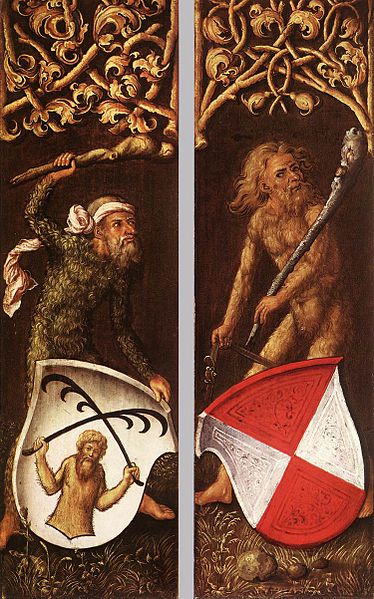
Elf (Woodwose)
In the deepest, darkest, thickest woodland of the temperate world live the people known as Woodwoses. Tall, thin, with fierce staring eyes and thick beards, their appearance is unmistakeable when they allow themselves to be seen. This, however, they rarely do. The most anybody is likely to see of one in its natural home is a brief rustle of ivy or a shadow moving in dappled sunlight - and then nothing.
Woodlands are lords and protectors of the forest. They are as aggressive in defending it from human woodcutters as they are goblinoid invaders: None are permitted to threaten their realm. When an intruder is discovered they strike from the shadows like ghosts with their magicks and then disperse.
Woodwoses rule the forest, but it is a rule of fear, not love. All life in the wood is considered to be theirs, be it tree or beast. They view it as their right to take what they need and bend all to their will; the animals and plants of the forest are nothing more than their chattels and slaves. This tyrannical rule is tempered by wisdom, however, for the Woodwoses are careful not to abuse their power to the point that it is taken from them by revolt. A kind of freedom exists for all creatures living in the forest - but only until a Woodwose has need of them.
Individually, Woodwoses are proud and quick to anger, with wills as hard as oak; only Dwarves surpass them in determination and strength of spirit. Though tall, they are physically frail, and they disdain physical combat - their power is in magic and manipulation of natural forces. Woodwose adventurers usually leave their homelands to search for greater knowledge and hence greater power, so that they can bring it back to their people and thus strengthen them against their enemies.
Elf (Woodwose)
Prime Requisite: Intelligence and Wisdom.
Other Requirements: Intelligence and Wisdom of 9 or greater.
Experience Bonus: 5% for an Intelligence and Wisdom of greater than 13; 10% for an Intelligence and Wisdom of greater than 15.
Hit Dice: d4 per level up to 12th level.
Maximum Level: 12
Armour: Only leather armour is permitted.
Weapons: Woodwoses may only use wooden or stone weapons - e.g. clubs, staffs and slings.
Special Abilities: Woodwoses have a 90% chance of not being spotted in woodland areas - this ability works in the same way as it does for Halflings. They have the innate ability to cast Speak With Animal or Speak With Plant three times per day.
Experience Levels: Woodwoses use the Magic-User experience table for purposes of advancement.
Saving Throws: Woodwoses use the Elf saving throw table.
Elf (Woodwose) Spell List
Woodwoses use the Magic User Spell/Level table, though they prepare their spells through meditation as Druids and Clerics do. They draw their spells from the following list:
Level 1
-Charm Person (M1)
-Shield (M1)
-Sleep (M1)
-Ventriloquism (M1)
-Detect Magic (M1)
-Read Magic (M1)
-Cause Light Wounds (C1)
-Resist Cold (C1)
-Faerie Fire (D1)
-Predict Weather (D1)
-Locate (D1)
-Magic Missile (M1)
Level 2
-Warp Wood (D2)
-Hold Person (C2)
-Know Alignment (C2)
-Silence 15' Radius (C2)
-Snake Charm (C2)
-Entangle (M2)
-ESP (M2)
-Invisibility (M2)
-Knock (M2)
-Phantasmal Force (M2)
-Web (M2)
-Mirror Image (M2)
Level 3
-Clairvoyance (M3)
-Dispel Magic (M3)
-Fly (M3)
-Haste (M3)
-Invisibility, 10' Radius (M3)
-Lightning Bolt (M3)
-Protection from Missiles (M3)
-Protection from Poison (D3)
-Call Lightning (D3)
-Growth of Animal (C3)
-Curse (C3)
-Speak With the Dead (C3)
Level 4
-Sticks to Snakes (C4)
-Cause Serious Wounds (C4)
-Animate Dead (C4)
-Plant Door (D4)
-Summon Animals (D4)
-Charm Monster (M4)
-Confusion (M4)
-Growth of Plants (M4)
-Wizard Eye (M4)
-Polymorph Self (M4)
Level 5
-Woodform (M5)
-Cloudkill (M5)
-Feeblemind (M5)
-Teleport (M5)
-Wall of Stone (M5)
-Control Winds (D5)
-Anti-Plant Shell (M5)
-Cause Critical Wounds (C5)
-Insect Plague (C5)
-Raise Dead (C5)
Level 6
-Create Normal Animals (C6)
-Find the Path (C6)
-Speak with Monsters (C6)
-Transport Through Plants (D6)
-Turn Wood (D6)
-Anti-Animal Shell (D6)
Monday, 23 June 2008
Elf Variants: II
I'll be editing the Curupira entry below to deal with some questions that cropped up, but let's push on and get another Elf variant out there into internet land. This time it's the Basque Faerie, the Basajaun.
Elf (Basajaun)
The Basajaunak inhabit hill and mountain heaths and forests. The most ancient of all peoples, they believe that they sprung from the earth itself, after it was struck by lightning. Legend has it that it was they who taught humankind the secret of farming, and they who taught the dwarves how to burrow and toil for silver. They see themselves as the older brothers of the other races, and try to help them when they can.
A Basajaun is taller and stronger than a human, with long, powerful arms and legs. Their men grow thick red beards, and their women wear their red hair long and loose. They live in small clan-groups of less than 100 - but each band is in contact with all the other bands in a wide area, allowing them to group together for mutual assistance in times of need.
They prize the simple life above all else: To them there is nothing of greater importance than freedom from care. Herding sheep, lying in beds of heather on warm summer days, and feeling the first autumn rain and wind on one's face; these are worth more than any treasure for a Basajaun. And yet their fraternal instinct towards their human, dwarf and halfling charges continually causes them to involve themselves in the world's affairs. This involvement can be as little as warning human shepherds about coming storms, or as much as joining together with local dwarves to fight off a goblin invasion.
Basajaunak identify most strongly with three animals: the wolf, the bear, and above all the lynx. These creatures share their rugged home, and are looked upon as kindred; Basajaunak cooperate with such beasts when hunting, and band together with them for mutual defence.
Basajaunak are powerful fighters, though they prefer to solve conflict through diplomacy. Their magic is simple, functional, and rarely used.
Elf (Basajaun)
The Basajaunak inhabit hill and mountain heaths and forests. The most ancient of all peoples, they believe that they sprung from the earth itself, after it was struck by lightning. Legend has it that it was they who taught humankind the secret of farming, and they who taught the dwarves how to burrow and toil for silver. They see themselves as the older brothers of the other races, and try to help them when they can.
A Basajaun is taller and stronger than a human, with long, powerful arms and legs. Their men grow thick red beards, and their women wear their red hair long and loose. They live in small clan-groups of less than 100 - but each band is in contact with all the other bands in a wide area, allowing them to group together for mutual assistance in times of need.
They prize the simple life above all else: To them there is nothing of greater importance than freedom from care. Herding sheep, lying in beds of heather on warm summer days, and feeling the first autumn rain and wind on one's face; these are worth more than any treasure for a Basajaun. And yet their fraternal instinct towards their human, dwarf and halfling charges continually causes them to involve themselves in the world's affairs. This involvement can be as little as warning human shepherds about coming storms, or as much as joining together with local dwarves to fight off a goblin invasion.
Basajaunak identify most strongly with three animals: the wolf, the bear, and above all the lynx. These creatures share their rugged home, and are looked upon as kindred; Basajaunak cooperate with such beasts when hunting, and band together with them for mutual defence.
Basajaunak are powerful fighters, though they prefer to solve conflict through diplomacy. Their magic is simple, functional, and rarely used.
Elf (Basajaun)
Prime Requisite: Strength and Wisdom.
Other Requirements: Strength and Wisdom of 9 or greater.
Experience Bonus: 5% for a Strength and Wisdom of greater than 13; 10% for a Strength and Wisdom of greater than 15.
Hit Dice: d8 per level up to 12th level.
Maximum Level: 12
Armour: All armour and shields are permitted.
Weapons: All weapons permitted.
Special Abilities: Basajaunak have infravision to 120'. They begin the game with the standard Fighter abilities (Lance Attack and Set Spear vs. Charge at 1st level; Fighter Combat Options at 660,000 XP), and also with the ability to Speak With Bears, Wolves and Lynx at will.
Experience Levels: Basajaunak use the Dwarf experience table for purposes of advancement.
Saving Throws: Basajaunak use the Halfling saving throw table.
Elf (Basajaun) Spell List
Basajaunak prepare spells through meditation in a similar manner to druids and clerics. They gain spells as they advance in levels according to the Cleric spell/level table; however, beyond 8th level they gain no new spells (and thus cannot cast spells of higher than 4th level).
Level 1
-Detect Danger (D1)
-Remove Fear (C1)
-Sleep (M1)
-Shield (M1)
-Detect Evil (C1)
-Resist Cold (C1)
Level 2
-Resist Fire (C2)
-Speak With Animal (C2)
-Know Alignment (C2)
-Hold Person (C2)
-Produce Fire (D2)
-Knock (M2)
Level 3
-Call Lightning (D3)
-Growth of Animal (C3)
-Cure Blindness (C3)
-Cure Disease (C3)
-Protection From Evil, 10' Radius (M3)
-Haste (M3)
Level 4
-Charm Monster (M4)
-Summon Animals (D4)
-Speak With Plants (C4)
-Sticks to Snakes (C4)
-Confusion (M4)
-Ice Storm/Wall of Ice (M4)
Sunday, 22 June 2008
Doing Things With Elves (Double Entendre Optional) Part 1
So, here's the first of my Rules Cyclopedia Elf variants. It's based roughly on the Tupi mythological creature, the Curupira. For each variant, I'm not going to mention ordinary elves except in reference to mechanics - the implication being that the variant can completely replace elves in a given setting or game.
Elf (Curupira)
The Curupira are a race of humanoids who inhabit the thickest equatorial, tropical and semi-tropical forests. They are looked upon as a primitive ancestral remnant by those who are aware of them, but the majority of 'civilized' races know little, if anything, about them.
Their appearance is humanoid, with delicate features and pointed ears, although they are smaller and weaker than most humans. Their hair is almost always a bright flaming red, and their teeth and nails are green. Their most unusual feature is their feet, which face backwards. This makes them extremely difficult to track when they are in their forest home, and it gives them a loping gait which other humanoid races find disturbing and unnatural.
To other peoples, the Curupira are inscrutable. Their motivations are neither treasure nor power. Rather, their pleasure comes from the forest itself - the vibrancy of life around them, the thrill of the hunt, the noises and colours and smells. Like the forest, their character is mercurial and capricious: at times they can appear as implacable and as phlegmatic as a wall of trees; at others they can be warm and welcoming; and at others they are highly dangerous. These changes in mood do not have reasons or motivations which other humanoids can easily discern.
Curupira are strong with magic and make moderately good fighters, especially with missile weapons. They primarily use magic that allows them to manipulate their natural surroundings, and to beguile and confuse their enemies.
Elf (Curupira)
The Curupira are a race of humanoids who inhabit the thickest equatorial, tropical and semi-tropical forests. They are looked upon as a primitive ancestral remnant by those who are aware of them, but the majority of 'civilized' races know little, if anything, about them.
Their appearance is humanoid, with delicate features and pointed ears, although they are smaller and weaker than most humans. Their hair is almost always a bright flaming red, and their teeth and nails are green. Their most unusual feature is their feet, which face backwards. This makes them extremely difficult to track when they are in their forest home, and it gives them a loping gait which other humanoid races find disturbing and unnatural.
To other peoples, the Curupira are inscrutable. Their motivations are neither treasure nor power. Rather, their pleasure comes from the forest itself - the vibrancy of life around them, the thrill of the hunt, the noises and colours and smells. Like the forest, their character is mercurial and capricious: at times they can appear as implacable and as phlegmatic as a wall of trees; at others they can be warm and welcoming; and at others they are highly dangerous. These changes in mood do not have reasons or motivations which other humanoids can easily discern.
Curupira are strong with magic and make moderately good fighters, especially with missile weapons. They primarily use magic that allows them to manipulate their natural surroundings, and to beguile and confuse their enemies.
Elf (Curupira)I'm not sure if, as it stands, the Curupira is overpowered or not, but my main concern is that it might step on the toes of the Druid too much. Any feedback would be appreciated.
Prime Requisite: Wisdom and Dexterity.
Other Requirements: Dexterity, Wisdom and Intelligence of 9 or greater.
Experience Bonus: 5% for a Dexterity and Wisdom of greater than 13; 10% for a Dexterity and Wisdom of greater than 15.
Hit Dice: d6 per level up to 10th level.
Maximum Level: 10
Armour: Natural armours and shields.
Weapons: Spear, bow, sling, club, axe, javelin, bola, blowpipe.
Special Abilities: Infravision; Never surprised in wilderness areas; Impossible to track in wilderness areas; Bonus Skill (Stealth: Forest); +1 to hit when using missile weapons.
Experience Levels: As standard Elves. Upon reaching level 10 they gain fighter abilities as per standard Elves; note however that Curupira do not gain fighter abilities at first level.
Elf (Curupira) Spell List
Curupira progress in magical power as do standard Elves.
Level 1
-Detect Danger (D1)
-Faerie Fire (D1)
-Locate (D1)
-Purify Food and Water (C1)
Level 2
-Warp Wood (D2)
-Produce Fire (D2)
-Speak With Animals (C2)
-Snake Charm (C2)
-Entangle (M2)
Level 3
-Water Breathing (M3)
-Call Lightning (D3)
-Hold Animal (D3)
-Protection From Poison (D3)
-Growth of Animal (C3)
-Hold Person (M3)
Level 4
-Growth of Plants (M4)
-Hallucinatory Terrain (M4)
-Dimension Door (M4)
-Summon Animals (D4)
-Plant Door (D4)
-Speak With Plants (C4)
-Sticks to Snakes (C4)
-Neutralize Poison (C4)
Level 5
-Insect Plague (C5)
-Anti-Plant Shell (D5)
-Control Winds (D5)
-Hold Monster (M5)
-Woodform (M5)
-Teleport (M5)
-Wall of Stone (M5)
Subscribe to:
Posts (Atom)